
“In the end, we will remember not the words of our enemies but the silence of our friends” -Dr. Martin Luther King
1.0 INTRODUCTION
The democratic structure of the Nigerian State has benefitted from the massive inputs of the Nigerian media for its survival and development.
The Nigerian media ranks high on the pedestal of stakeholders of the Nigerian project, indeed, a lot of positives could be rightly credited to the Nigerian media in terms of the continued existence of this nation.
I consider the topic under reference highly imperative given the multi-faceted challenges that are currently assailing this nation, it is my humble view that a lot of beneficial nation-building ideas can be cross-fertilized through the instrumentality of this gathering today.
My approach here today relative to the topic is to conceptually clarify the key terms and expound freely on the role of the media in our current democratic set up by appraising the delicate balance between national security and press freedom.
As I round off this introductory session, please permit me to stress that Nigeria is in dire straits and only dialogue, constructive engagements and amplification of our shared humanity can reverse the gloomy extinction that stares us all in the face.
I must therefore commend the thoughtfulness of the Nigerian Union of Journalists, NTA Headquarters Chapel for deeming it fit to come up with this topic and also extending to me, the privilege of being the speaker at today’s lecture.
I am quite pleased that the NUJ has transcended the level of collective agitations for workers’ welfare to this instant discourse that calls for national solidarity.
Could you please join me as I sing this eternal song of solidarity before delving into the meat of the discourse.
When the union’s inspiration through the workers’ blood shall run
There can be no power greater anywhere beneath the sun
Yet what force on earth is weaker than the feeble strength of one
But the union makes us strong
Solidarity forever
Solidarity forever
Solidarity forever
Solidarity forever
For the union makes us strong
It is we who plowed the prairies, built the cities where they trade
Dug the mines and built the workshops, endless miles of railroad laid
Now we stand outcast and starving midst the wonders we have made
But the union makes us strong
Solidarity forever
Solidarity forever
Solidarity forever
For the union makes us strong
They have taken untold millions that they never toiled to earn
But without our brain and muscle not a single wheel can turn
We can break their haughty power, gain our freedom when we learn
That the union makes us strong
In our hands is placed a power greater than their hoarded gold
Greater than the might of atoms, magnified a thousand fold
We can bring to birth a new world from the ashes of the old
For the union makes us strong
Solidarity forever
Solidarity forever
Solidarity forever
For the union makes us strong
2.0. CONCEPTUAL CLARIFICATIONS
Like most other concepts, security does not admit of an easy or all-encompassing definition, it is a robust concept with a borderless restraint. However, in simple terms, security is freedom from the potentialities and existentialities of harm, injury at the instance of hostile forces. It is protection from violence, coercion and fear.
Historically, there has been a consideration evolution of the concept of security since the end of the Cold War which mainly were proxy wars fought US allies on the one hand and the Soviet Union on the other hand.
Thus, security as a term of interest when referenced under this historical context would mean the increased or decreased level of hostilities between nations post World War II.
The realm of security therefore covers such contexts as global security, human security, border security, cybersecurity, environmental security, economic security, corporate security, food security, internal security, national security among others.
By the contemplation of this lecture, it is expedient in my considered view, to highlight the definitional frame of security using these three sub-contexts namely: human security, internal security and national security.
Human security simply means the protection of fundamental freedoms, that is freedoms that are the real essence of life. Human security encapsulates three freedoms: freedom from fear, freedom from want and freedom from indignity. It suggests a situation where an individual can aspire to his desired level of happiness and peace within the society. Human security is the characterized by the absence of both violent and non-violent threats to the rights of the people, their safety and their lives.
This again emphasizes the universal principle of self-preservation over and above the other concepts of security such as national security, global security, food security among others. It is however respectfully submitted that there is an interplay of these concepts alongside concept of human security. It is almost implausible that each of these sub-concepts of security can stand in isolation.
Internal security on the other hand bothers largely on the maintenance of peace within the confines of a sovereign state by ensuring that there is an observance, compliance and adherence to the laws of the land by citizens. Internal security ensures that internal aggression and threats within the borders of a nation are warded off or met with the monopolized violence of the State. The responsibility of internal security is primarily within the purview of the constitutional mandate of the Police. Other paramilitary agencies equally share in this responsibility and they are all guided by the laws establishing them.
National Security as the name suggests bother on the security of the nation as a corporate entity. It is all encompassing but the main goal is the defence of the corporate existence of a country. In that vein, the armed forces are empowered by the Constitution to defend the territorial integrity of the nation. They undertake the important duty of defending the nation against external aggressors and in some instances, internal aggressors. National security could also extend to the defence of a nation’s economy against saboteurs and traitors.
Admittedly, at the base of national security is the maintenance of the political structure of a nation state which carries with it a non-negotiability tag.
Going further under the chapter, the term media has been given several definitions, however simpliciter, the term connotes any channel of communication. This can include anything from printed paper to digital data. It refers to television, radio, newspaper, internet and other forms of communication. I dare say that any other definition is an expansion of the afore-stated ones.
3.0 THE ROLE OF THE MEDIA IN NIGERIA’S DEMOCRACY
Democracy has been popularly defined as a government of the people by the people and for the people. This invariably means that democracy is about popular choices; the general expression of the will of the majority while also ensuring that the minority are not precluded from having their say. It is the system of government that opens the electorates to a vista of choices and how those choices are to be made without any fear or coercion.
Indeed, democracy is a big deal as it practically puts the socio-economic fortunes of the people in the hands of a few decision makers.
Most often, efforts are dissipated into referencing the executive, the legislature and the judiciary as being the three arms of government in a democracy because they are explicitly named as beneficiaries of the power sharing structure as contained in the constitution of any democratic state, however, the media is the pillar that supports this structure. This is what informs the coronation of the media as the fourth estate of the realm. The existence of the media is tied to the sovereignty of the people from whom government derives its constitutional powers in exchange for fundamental freedom of expression of the people.
The Nigerian media is a critical stakeholder in every sphere of the Nigerian project; from the military days to this present democratic dispensation, the Nigerian media has continued to advance and stabilize the democratic structure of the Nigerian State by promoting the fundamental freedoms of the Nigerian people. With the instrumentality of the proverbial pen which is mightier than the sword, the Nigerian media has demonstrated that indeed it is a powerful force to be reckoned with in the society.
In May 1999, Nigeria returned to democratic governance after series of military interregna and Nigeria’s Fourth Estate of the Realm has since remained resilient and patriotic in their noble duties despite the daunting intimidation, threats and harassments by state and non-state actors.
The media having been vested with the constitutional mandate of holding the government to account has not cowered or shirked this responsibility. For context, Section 22 of the Constitution of the Federal Republic of Nigeria 1999 (as amended) is hereby reproduced below:
“The press, radio, television and other agencies of the mass media shall at all times be free to uphold the fundamental objectives contained in this Chapter and uphold the responsibility and accountability of the Government to the people.”
The above obligation further deepens the imprimatur of the Nigerian people to hold the government to account using the agency of the mass media. A number of media organizations have gone ahead to crystallize their position in this regard by enforcing the freedom of the press as guaranteed under Section 39 of the Constitution of the Federal Republic of Nigeria.
Again, it is not rocket science that the continued legitimacy of any democratic government is assured when the right to freedom of speech and expression and by extension other fundamental rights are protected at all costs.
The watchdog appellation given to the media is an understatement of the power it possesses relative to governmental powers. Only a fool dares to lock horns with the fourth estate of the realm.
The Nigerian media provides the platform through which the people are informed about the activities of the government and this is crucial because once there is a disconnect between the governed and the government, then the democratic process is exposed to attacks by agent provocateurs, saboteurs and unpatriotic elements in the opposition.
The electoral process is another area where the noble duty of the media is also largely felt. The pre-election, election and post-election stages of the election cycles have always received adequate attention of the Nigerian media by way of voters’ education, voters’ information, voters’ mobilization and monitoring of election results. The electorates are presented with plethora of information by the Nigerian media in an election season and the consequent choices again give life to our democracy.
Furthermore, the democratic development of the nation rests on the shoulders of the media who daily reports the activities of the three arms of the government without fail. Save for instances where a media organization is alleged to have breached certain codes of broadcasting in the opinion of the Nigerian Broadcasting Corporation, there is hardly a time when the people are not informed about the government as well as happenings in the society.
That said, it is important to emphasise that the standard of objectivity which is a core value of the media profession has become manipulated and eroded by some media practitioners and organizations to such an extent that recklessness and partisanship is now fronted as ‘holding the government to account’.
This is a lamentable tragedy which must reversed because the issues that now confront the Nigerian State calls for restraint, decency, patriotism and civility when reporting the news.
The role of the Nigerian media therefore is not the portrayal of the government as weak but a careful balance is needed so as not to play into the hands of enemies of the State. This brings to the fore the issue of National security which will be discussed better in the succeeding chapter.
4.0 NATIONAL SECURITY AND THE MEDIA
As earlier inferred, national security cannot be seen alone from the standpoint of the protection of the territorial integrity of Nigeria but it encompasses the continued existence of Nigeria as a corporate entity. It therefore means that anything that comes against the circumference of that continued existence of Nigeria is to be taken as a threat to national security. This is quite instructive because there are unarmed individuals with a large followership whose words of mouth or statement can wreck devastating havoc on our corporate existence. The Nigerian media when used in advancing and propagating such inflammatory statements are culpable in such threat to national security.
Closely instructive here is the case of Asari Dokubo v. Federal Republic of Nigeria which was finally decided by the Supreme Court in 2007, one of the counts upon which the accused was charged at the trial court was premised on the interview he granted to the Independent Newspaper wherein he stated inter alia as follows:
“Nigeria is an evil entity. It has nothing to stand on and I will continue to fight and try and see that Nigeria dissolves and disintegrates and I am ready to hold on to the struggle to see to this till the day I die. I do not see any reason why I should continue to live with people that have no relationship with me whatsoever.”
The above was taken to be a threat to national security and thus the appellant was denied bail which was contested at the Supreme Court. The apex court in deciding the propriety or otherwise of the bail denial held as follows:
“Where national security is threatened or there is a real likelihood of it being threatened, human rights or the individual right of those responsible take second place, human rights or individual rights must be suspended until the national security can be protected or well taken care of. This is not anything new. The corporate existence of Nigeria as a united, harmonious, indivisible and indissoluble sovereign nation is certainly greater than any citizen’s liberty or right. Once the security of this nation is in jeopardy and it survives in pieces rather than in peace, the individual’s liberty or right may not even exist.”
The above decision was a restatement of an earlier decision of the Court of Appeal with Justice Bode Rhodes-Vivour delivering the lead judgment. Now, this subsisting judgment of the Supreme Court became an authority upon which President Buhari stated at the NBA conference in 2018 that “Rule of Law must be subject to the supremacy of the nation’s security and national interest. Our apex court has had cause to adopt a position on this issue on this issue in this regard and it is now a matter of judicial recognition that; where national security and public interest are threatened or there is a likelihood of their being threatened, the individual rights of those allegedly responsible must take second place, in favour of the greater good of society.”
Most respectfully, the President’s conflation of national security, national interest on one hand and rule of law and individual rights on the other hand is a bit problematic, in the sense that the rule of law emphasizes the supremacy of the law over the leader, the led and the decisions taken by them in between. For definition purposes, foremost Professor of Law. A. V Dicey defined the rule of law as the equality of all persons before the law; observance of all laws by persons and authorities, irrespective of status. In the case of Military Governor of Lagos State v. Ojukwu (2001) FWLR (Pt. 50) 1779, the Supreme Court held inter alia as follows: “The Nigerian Constitution is founded on the rule of law, the primary meaning of which is that everything must be done according to law. Nigeria, being one of the countries in the world which professes loudly to follow the rule of law, gives no room for the rule of self-help by force to operate.”
The rule of law is therefore accommodative of national security, the national interest and individual rights.
Contradistinctively, the President was right that individual rights can take the back stage in favour of national interest and by extension, national security. It is therefore submitted that human rights can be suspended upon the determination of a court of competent jurisdiction.
It is not a secret that some sections of the Nigerian media have given their platforms to secessionists, ethnic jingoists, tribal warlords and others who have an issue with the unity of Nigeria to promote their warped ideologies and agenda. This is a grave misapprehension of one of the core ethics of journalism which is fair and balanced reportage of the news. However, in my opinion, unfair and unpatriotic comments ab-initio should not qualify to be reported in the news. Given the peculiarities of the Nigeria, our choices are limited in this journey of nationhood and given the potent power of the press, we should ensure as much as possible that negative opinion moulders do not get the attention they so much desire by featuring them as new items.
It is naturally expected that mainstream media will reflect the distinctions in our national unity by upholding the difference in opinions and perspectives of our diverse tribes and culture. This however must be subject to our shared national values. There is the need for a proper management of our diversity by media organisations, in such a manner that the national interest is protected at all costs.
A lot unite us in this nation rather than our differences, we must celebrate our significant positives and tone down our apparent negatives. It is a fact that cannot be gainsaid that the menace of insecurity has become so protracted and convoluted that no region is spared of it. Violent cult activities, armed robbery attacks, the ENDSARS protests, the Southern Kaduna massacres by armed herders, IPOB agitations and lately Ilana Omo Oodua agitations, banditry, Boko Haram attacks, attacks on police formations, abductions are just few examples of the geographical distribution of insecurity in Nigeria.
I must stress however that insecurity is a universal phenomenon and the current challenges bedeviling our security architecture are largely traceable to the political instability and crisis of the Sahel Region notably Libya and Morocco and the resulting proliferation of arms has provided opportunities for criminal elements who now assail Nigeria with all manners of woes. It is a fact that the whole world remains a huge arena of conflict and insecurity despite the concerted efforts at world peace. Advanced democracies have their fair share of insecurity especially gun-related shootings but the manner of dissemination of the news always tend to portray the authorities in those countries as strong and powerful enough to contain these threats. It is therefore wise for the Nigerian media to douse tensions that viciously threaten us by upholding the tenets of responsible and patriotic journalism other than the one that gives more leverage and attention to the enemy.
The role of the media during conflict situations for instance should not only protect the developing activities in a particular area but to present the comprehensive response of the State in order for citizens outside those affected areas and indeed everyone to engage the Government as touching the conflict.
The Fourth Estate of the Realm must ensure a dispassionate and objective dissemination of information at all times to the citizens. The government should endeavour to constantly engage the press so that it will not suffer perception issues. The freedom of the press is non-negotiable and paramount in a constitutional democracy and its protection must be guaranteed at all times, an attempt to gag the press or criminalize free speech is an invitation to the rejection of governmental authority which is entrusted on the government by the people. On the other hand, citizens must be educated by the press that every right comes with its corresponding duty and responsibility, free speech therefore should not be construed to mean license to make careless, reckless and violence evoking statements.
The above advisory should not be construed as suggesting that the Nigerian media should favour the government at the expense of the citizens’ right to proper information. On the other hand, the government must clarify issues of national interest by engaging and seeking the understanding of the media rather than their usual response of coercion.
5.0 CONCLUSION
The role of the media in stabilizing Nigeria’s democracy can be viewed from the standpoint of their duties as affirmed under the constitution.
There is no gainsaying the point that the Nigerian media has been at the forefront of advocacy for citizens’ participation in governance and in my considered opinion, they remain the real defenders of this core democratic right. The balance here is that every right comes with its corresponding responsibility and as a passionate advocate of press freedom, I want to strongly counsel that the Nigerian media in upholding fundamental freedoms should also strive to uphold and defend national security.
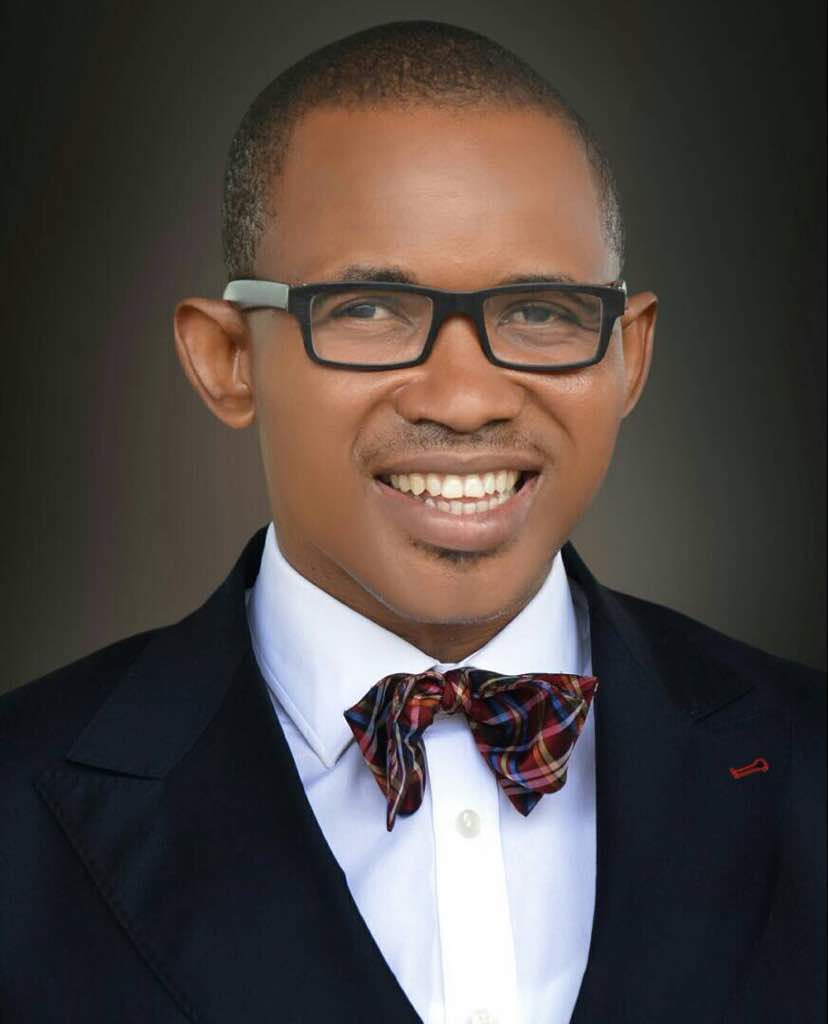
· Ajulo, the Managing Partner Castle of Law and Executive Director, Egalitarian Mission For Africa delivered this paper at the NUJ NTA Headquarters Chapel’s Week in Abuja.
1.0 INTRODUCTION
The democratic structure of the Nigerian State has benefitted from the massive inputs of the Nigerian media for its survival and development.
The Nigerian media ranks high on the pedestal of stakeholders of the Nigerian project, indeed, a lot of positives could be rightly credited to the Nigerian media in terms of the continued existence of this nation.
I consider the topic under reference highly imperative given the multi-faceted challenges that are currently assailing this nation, it is my humble view that a lot of beneficial nation-building ideas can be cross-fertilized through the instrumentality of this gathering today.
My approach here today relative to the topic is to conceptually clarify the key terms and expound freely on the role of the media in our current democratic set up by appraising the delicate balance between national security and press freedom.
As I round off this introductory session, please permit me to stress that Nigeria is in dire straits and only dialogue, constructive engagements and amplification of our shared humanity can reverse the gloomy extinction that stares us all in the face.
I must therefore commend the thoughtfulness of the Nigerian Union of Journalists, NTA Headquarters Chapel for deeming it fit to come up with this topic and also extending to me, the privilege of being the speaker at today’s lecture.
I am quite pleased that the NUJ has transcended the level of collective agitations for workers’ welfare to this instant discourse that calls for national solidarity.
Could you please join me as I sing this eternal song of solidarity before delving into the meat of the discourse.
When the union’s inspiration through the workers’ blood shall run
There can be no power greater anywhere beneath the sun
Yet what force on earth is weaker than the feeble strength of one
But the union makes us strong
Solidarity forever
Solidarity forever
Solidarity forever
Solidarity forever
For the union makes us strong
It is we who plowed the prairies, built the cities where they trade
Dug the mines and built the workshops, endless miles of railroad laid
Now we stand outcast and starving midst the wonders we have made
But the union makes us strong
Solidarity forever
Solidarity forever
Solidarity forever
For the union makes us strong
They have taken untold millions that they never toiled to earn
But without our brain and muscle not a single wheel can turn
We can break their haughty power, gain our freedom when we learn
That the union makes us strong
In our hands is placed a power greater than their hoarded gold
Greater than the might of atoms, magnified a thousand fold
We can bring to birth a new world from the ashes of the old
For the union makes us strong
Solidarity forever
Solidarity forever
Solidarity forever
For the union makes us strong
2.0. CONCEPTUAL CLARIFICATIONS
Like most other concepts, security does not admit of an easy or all-encompassing definition, it is a robust concept with a borderless restraint. However, in simple terms, security is freedom from the potentialities and existentialities of harm, injury at the instance of hostile forces. It is protection from violence, coercion and fear.
Historically, there has been a consideration evolution of the concept of security since the end of the Cold War which mainly were proxy wars fought US allies on the one hand and the Soviet Union on the other hand.
Thus, security as a term of interest when referenced under this historical context would mean the increased or decreased level of hostilities between nations post World War II.
The realm of security therefore covers such contexts as global security, human security, border security, cybersecurity, environmental security, economic security, corporate security, food security, internal security, national security among others.
By the contemplation of this lecture, it is expedient in my considered view, to highlight the definitional frame of security using these three sub-contexts namely: human security, internal security and national security.
Human security simply means the protection of fundamental freedoms, that is freedoms that are the real essence of life. Human security encapsulates three freedoms: freedom from fear, freedom from want and freedom from indignity. It suggests a situation where an individual can aspire to his desired level of happiness and peace within the society. Human security is the characterized by the absence of both violent and non-violent threats to the rights of the people, their safety and their lives.
This again emphasizes the universal principle of self-preservation over and above the other concepts of security such as national security, global security, food security among others. It is however respectfully submitted that there is an interplay of these concepts alongside concept of human security. It is almost implausible that each of these sub-concepts of security can stand in isolation.
Internal security on the other hand bothers largely on the maintenance of peace within the confines of a sovereign state by ensuring that there is an observance, compliance and adherence to the laws of the land by citizens. Internal security ensures that internal aggression and threats within the borders of a nation are warded off or met with the monopolized violence of the State. The responsibility of internal security is primarily within the purview of the constitutional mandate of the Police. Other paramilitary agencies equally share in this responsibility and they are all guided by the laws establishing them.
National Security as the name suggests bother on the security of the nation as a corporate entity. It is all encompassing but the main goal is the defence of the corporate existence of a country. In that vein, the armed forces are empowered by the Constitution to defend the territorial integrity of the nation. They undertake the important duty of defending the nation against external aggressors and in some instances, internal aggressors. National security could also extend to the defence of a nation’s economy against saboteurs and traitors.
Admittedly, at the base of national security is the maintenance of the political structure of a nation state which carries with it a non-negotiability tag.
Going further under the chapter, the term media has been given several definitions, however simpliciter, the term connotes any channel of communication. This can include anything from printed paper to digital data. It refers to television, radio, newspaper, internet and other forms of communication. I dare say that any other definition is an expansion of the afore-stated ones.
3.0 THE ROLE OF THE MEDIA IN NIGERIA’S DEMOCRACY
Democracy has been popularly defined as a government of the people by the people and for the people. This invariably means that democracy is about popular choices; the general expression of the will of the majority while also ensuring that the minority are not precluded from having their say. It is the system of government that opens the electorates to a vista of choices and how those choices are to be made without any fear or coercion.
Indeed, democracy is a big deal as it practically puts the socio-economic fortunes of the people in the hands of a few decision makers.
Most often, efforts are dissipated into referencing the executive, the legislature and the judiciary as being the three arms of government in a democracy because they are explicitly named as beneficiaries of the power sharing structure as contained in the constitution of any democratic state, however, the media is the pillar that supports this structure. This is what informs the coronation of the media as the fourth estate of the realm. The existence of the media is tied to the sovereignty of the people from whom government derives its constitutional powers in exchange for fundamental freedom of expression of the people.
The Nigerian media is a critical stakeholder in every sphere of the Nigerian project; from the military days to this present democratic dispensation, the Nigerian media has continued to advance and stabilize the democratic structure of the Nigerian State by promoting the fundamental freedoms of the Nigerian people. With the instrumentality of the proverbial pen which is mightier than the sword, the Nigerian media has demonstrated that indeed it is a powerful force to be reckoned with in the society.
In May 1999, Nigeria returned to democratic governance after series of military interregna and Nigeria’s Fourth Estate of the Realm has since remained resilient and patriotic in their noble duties despite the daunting intimidation, threats and harassments by state and non-state actors.
The media having been vested with the constitutional mandate of holding the government to account has not cowered or shirked this responsibility. For context, Section 22 of the Constitution of the Federal Republic of Nigeria 1999 (as amended) is hereby reproduced below:
“The press, radio, television and other agencies of the mass media shall at all times be free to uphold the fundamental objectives contained in this Chapter and uphold the responsibility and accountability of the Government to the people.”
The above obligation further deepens the imprimatur of the Nigerian people to hold the government to account using the agency of the mass media. A number of media organizations have gone ahead to crystallize their position in this regard by enforcing the freedom of the press as guaranteed under Section 39 of the Constitution of the Federal Republic of Nigeria.
Again, it is not rocket science that the continued legitimacy of any democratic government is assured when the right to freedom of speech and expression and by extension other fundamental rights are protected at all costs.
The watchdog appellation given to the media is an understatement of the power it possesses relative to governmental powers. Only a fool dares to lock horns with the fourth estate of the realm.
The Nigerian media provides the platform through which the people are informed about the activities of the government and this is crucial because once there is a disconnect between the governed and the government, then the democratic process is exposed to attacks by agent provocateurs, saboteurs and unpatriotic elements in the opposition.
The electoral process is another area where the noble duty of the media is also largely felt. The pre-election, election and post-election stages of the election cycles have always received adequate attention of the Nigerian media by way of voters’ education, voters’ information, voters’ mobilization and monitoring of election results. The electorates are presented with plethora of information by the Nigerian media in an election season and the consequent choices again give life to our democracy.
Furthermore, the democratic development of the nation rests on the shoulders of the media who daily reports the activities of the three arms of the government without fail. Save for instances where a media organization is alleged to have breached certain codes of broadcasting in the opinion of the Nigerian Broadcasting Corporation, there is hardly a time when the people are not informed about the government as well as happenings in the society.
That said, it is important to emphasise that the standard of objectivity which is a core value of the media profession has become manipulated and eroded by some media practitioners and organizations to such an extent that recklessness and partisanship is now fronted as ‘holding the government to account’.
This is a lamentable tragedy which must reversed because the issues that now confront the Nigerian State calls for restraint, decency, patriotism and civility when reporting the news.
The role of the Nigerian media therefore is not the portrayal of the government as weak but a careful balance is needed so as not to play into the hands of enemies of the State. This brings to the fore the issue of National security which will be discussed better in the succeeding chapter.
4.0 NATIONAL SECURITY AND THE MEDIA
As earlier inferred, national security cannot be seen alone from the standpoint of the protection of the territorial integrity of Nigeria but it encompasses the continued existence of Nigeria as a corporate entity. It therefore means that anything that comes against the circumference of that continued existence of Nigeria is to be taken as a threat to national security. This is quite instructive because there are unarmed individuals with a large followership whose words of mouth or statement can wreck devastating havoc on our corporate existence. The Nigerian media when used in advancing and propagating such inflammatory statements are culpable in such threat to national security.
Closely instructive here is the case of Asari Dokubo v. Federal Republic of Nigeria which was finally decided by the Supreme Court in 2007, one of the counts upon which the accused was charged at the trial court was premised on the interview he granted to the Independent Newspaper wherein he stated inter alia as follows:
“Nigeria is an evil entity. It has nothing to stand on and I will continue to fight and try and see that Nigeria dissolves and disintegrates and I am ready to hold on to the struggle to see to this till the day I die. I do not see any reason why I should continue to live with people that have no relationship with me whatsoever.”
The above was taken to be a threat to national security and thus the appellant was denied bail which was contested at the Supreme Court. The apex court in deciding the propriety or otherwise of the bail denial held as follows:
“Where national security is threatened or there is a real likelihood of it being threatened, human rights or the individual right of those responsible take second place, human rights or individual rights must be suspended until the national security can be protected or well taken care of. This is not anything new. The corporate existence of Nigeria as a united, harmonious, indivisible and indissoluble sovereign nation is certainly greater than any citizen’s liberty or right. Once the security of this nation is in jeopardy and it survives in pieces rather than in peace, the individual’s liberty or right may not even exist.”
The above decision was a restatement of an earlier decision of the Court of Appeal with Justice Bode Rhodes-Vivour delivering the lead judgment. Now, this subsisting judgment of the Supreme Court became an authority upon which President Buhari stated at the NBA conference in 2018 that “Rule of Law must be subject to the supremacy of the nation’s security and national interest. Our apex court has had cause to adopt a position on this issue on this issue in this regard and it is now a matter of judicial recognition that; where national security and public interest are threatened or there is a likelihood of their being threatened, the individual rights of those allegedly responsible must take second place, in favour of the greater good of society.”
Most respectfully, the President’s conflation of national security, national interest on one hand and rule of law and individual rights on the other hand is a bit problematic, in the sense that the rule of law emphasizes the supremacy of the law over the leader, the led and the decisions taken by them in between. For definition purposes, foremost Professor of Law. A. V Dicey defined the rule of law as the equality of all persons before the law; observance of all laws by persons and authorities, irrespective of status. In the case of Military Governor of Lagos State v. Ojukwu (2001) FWLR (Pt. 50) 1779, the Supreme Court held inter alia as follows: “The Nigerian Constitution is founded on the rule of law, the primary meaning of which is that everything must be done according to law. Nigeria, being one of the countries in the world which professes loudly to follow the rule of law, gives no room for the rule of self-help by force to operate.”
The rule of law is therefore accommodative of national security, the national interest and individual rights.
Contradistinctively, the President was right that individual rights can take the back stage in favour of national interest and by extension, national security. It is therefore submitted that human rights can be suspended upon the determination of a court of competent jurisdiction.
It is not a secret that some sections of the Nigerian media have given their platforms to secessionists, ethnic jingoists, tribal warlords and others who have an issue with the unity of Nigeria to promote their warped ideologies and agenda. This is a grave misapprehension of one of the core ethics of journalism which is fair and balanced reportage of the news. However, in my opinion, unfair and unpatriotic comments ab-initio should not qualify to be reported in the news. Given the peculiarities of the Nigeria, our choices are limited in this journey of nationhood and given the potent power of the press, we should ensure as much as possible that negative opinion moulders do not get the attention they so much desire by featuring them as new items.
It is naturally expected that mainstream media will reflect the distinctions in our national unity by upholding the difference in opinions and perspectives of our diverse tribes and culture. This however must be subject to our shared national values. There is the need for a proper management of our diversity by media organisations, in such a manner that the national interest is protected at all costs.
A lot unite us in this nation rather than our differences, we must celebrate our significant positives and tone down our apparent negatives. It is a fact that cannot be gainsaid that the menace of insecurity has become so protracted and convoluted that no region is spared of it. Violent cult activities, armed robbery attacks, the ENDSARS protests, the Southern Kaduna massacres by armed herders, IPOB agitations and lately Ilana Omo Oodua agitations, banditry, Boko Haram attacks, attacks on police formations, abductions are just few examples of the geographical distribution of insecurity in Nigeria.
I must stress however that insecurity is a universal phenomenon and the current challenges bedeviling our security architecture are largely traceable to the political instability and crisis of the Sahel Region notably Libya and Morocco and the resulting proliferation of arms has provided opportunities for criminal elements who now assail Nigeria with all manners of woes. It is a fact that the whole world remains a huge arena of conflict and insecurity despite the concerted efforts at world peace. Advanced democracies have their fair share of insecurity especially gun-related shootings but the manner of dissemination of the news always tend to portray the authorities in those countries as strong and powerful enough to contain these threats. It is therefore wise for the Nigerian media to douse tensions that viciously threaten us by upholding the tenets of responsible and patriotic journalism other than the one that gives more leverage and attention to the enemy.
The role of the media during conflict situations for instance should not only protect the developing activities in a particular area but to present the comprehensive response of the State in order for citizens outside those affected areas and indeed everyone to engage the Government as touching the conflict.
The Fourth Estate of the Realm must ensure a dispassionate and objective dissemination of information at all times to the citizens. The government should endeavour to constantly engage the press so that it will not suffer perception issues. The freedom of the press is non-negotiable and paramount in a constitutional democracy and its protection must be guaranteed at all times, an attempt to gag the press or criminalize free speech is an invitation to the rejection of governmental authority which is entrusted on the government by the people. On the other hand, citizens must be educated by the press that every right comes with its corresponding duty and responsibility, free speech therefore should not be construed to mean license to make careless, reckless and violence evoking statements.
The above advisory should not be construed as suggesting that the Nigerian media should favour the government at the expense of the citizens’ right to proper information. On the other hand, the government must clarify issues of national interest by engaging and seeking the understanding of the media rather than their usual response of coercion.
5.0 CONCLUSION
The role of the media in stabilizing Nigeria’s democracy can be viewed from the standpoint of their duties as affirmed under the constitution.
There is no gainsaying the point that the Nigerian media has been at the forefront of advocacy for citizens’ participation in governance and in my considered opinion, they remain the real defenders of this core democratic right. The balance here is that every right comes with its corresponding responsibility and as a passionate advocate of press freedom, I want to strongly counsel that the Nigerian media in upholding fundamental freedoms should also strive to uphold and defend national security.
· Ajulo, the Managing Partner Castle of Law and Executive Director, Egalitarian Mission For Africa delivered this paper at the NUJ NTA Headquarters Chapel’s Week in Abuja.











 newsafresh