A renowned constitutional lawyer and Coordinator, Progressive Lawyers For Osinbajo (PYO), Dr. Kayode Ajulo has said the Vice President, Prof. Yemi Osinbajo, does not need an ultimatum to declare interest to run as President in the 2023 election.
He believed that the VP’s becoming the President of the Federal Republic of Nigeria through the next presidential election is constitutional and non-negotiable.
Ajulo added that Prof Osinbajo will make official declaration at the appropriate time, and even contrary to speculations that the number two citizen may not contest despite calls from loyalists and associates.
The renowned lawyer stated this on Wednesday, in Abuja. while reacting to the 30 days ultimatum given to the Vice President by a pro-APC group, National Coalition Group, NCG, asking him to officially declare interest to run for the Office of the President.
“It is an unpopular speculation that Prof. Osinbajo may not contest as president in 2023. We have even moved beyond the pedestrian stage of thinking if PYO will run or not. It is a prescribed arrangement and we are already preparing for a Prof. Osinbajo’s presidency because he represents everything Nigeria deserves at this crucial times.
“Though, we all have been expecting but Prof. Osinbajo has not declared because of the magnitude of responsibilities on his desk as the incumbent vice-President, which are huge and very important to national development and cannot be merged with a presidential campaign that demands very much time dedication too. And we shouldn’t expect a Senior Advocate of Nigeria and full Professor of law to jump the gun, there’s electoral law and guidelines and he mustn’t be found wanting.
“For me, this is another evidence of the VP’s unwearying characteristics of a dutiful man who is committed to the law and development of the country, and would not rank it above focusing on seeking a political office, an office of the president for that matter.” The legal luminary added.
The former National Secretary of the Labour Party said Osinbajo is arguably the best face of the APC for the 2023 election, saying it is not over with the APC presidency, despite many known challenges, with Prof. Osinbajo as the candidate of the party in the election.
He said “We are in a democracy. But the unfortunate reality of the 2023 political calculation is that Prof. Osinbajo is the only credible candidate the APC can present for the election. He’s loved both locally and internationally, and equally enjoys the support of Nigerians across board.
“Prof. Osinbajo will contest and win the 2023 election and his campaigns will be done within the ambit of rules and laws, and in accordance with INEC guidelines as against other aspirants’ campaign procedures we have seen in recent times.”
Ajulo, recounting his earlier statements on the presidential ambition of the national leader of the APC, Asiwaju Bola Ahmed Tinubu, claimed that the former Lagos State Governor is one of the major leaders supporting the Vice President for 2023 contest.
The legal luminary also said all political steps and strategies of Tinubu towards the 2023 election is in favour of the Vice President.
“No genuine supporter of PYO will abuse Asiwaju because of his presidential ambition. He is no novice in this political game. I can bold say that Asiwaju is strategically working for Vice President Osinbajo, judging by his moves.
“Without any iota of doubt, all the meetings and consultations Asiwaju Bola Ahmed Tinubu is presently doing will eventually be in favour of Prof. Osinbajo. Asiwaju is so calculative and whoever has been following his political moves lately will understand the gimmick that Asiwaju is out to ensure the 2023 presidency is truly for the southwest.
“Osinbajo is Asiwaju’s political creation and no creator will allow such a beautiful and convincing work of his hands fail. Now, and as at last count, there are over 126 professional, cultural, political groups across the country working for Prof. Osinbajo.” Ajulo claimed.
Ajulo further said he is baffled that some people equate the demands of office of the Vice President to demands of office of the President, saying the responsibilities of both offices are separately and clearly defined by the Nigerian constitution.
“Let me add this for the enlightenment of the people who, out of finding no substantial fault of him, have questioned the competence of Vice President under the present administration and expect him to operate beyond his constitutional marks. Prof. Osinbajo is a Senior Advocate of Law, and would never jump the gun. He understands that his roles as the Vice President have been cut clear by the Constitution of the Federal Republic of Nigeria.
“There cannot be two drivers on the wheel, his brief as the VP is to take charge in the absence of his Principal, and that he excellently did in the few times he spent on the driver’s seat, which marked a resounding of the hope we seek as a nation”, he stressed.
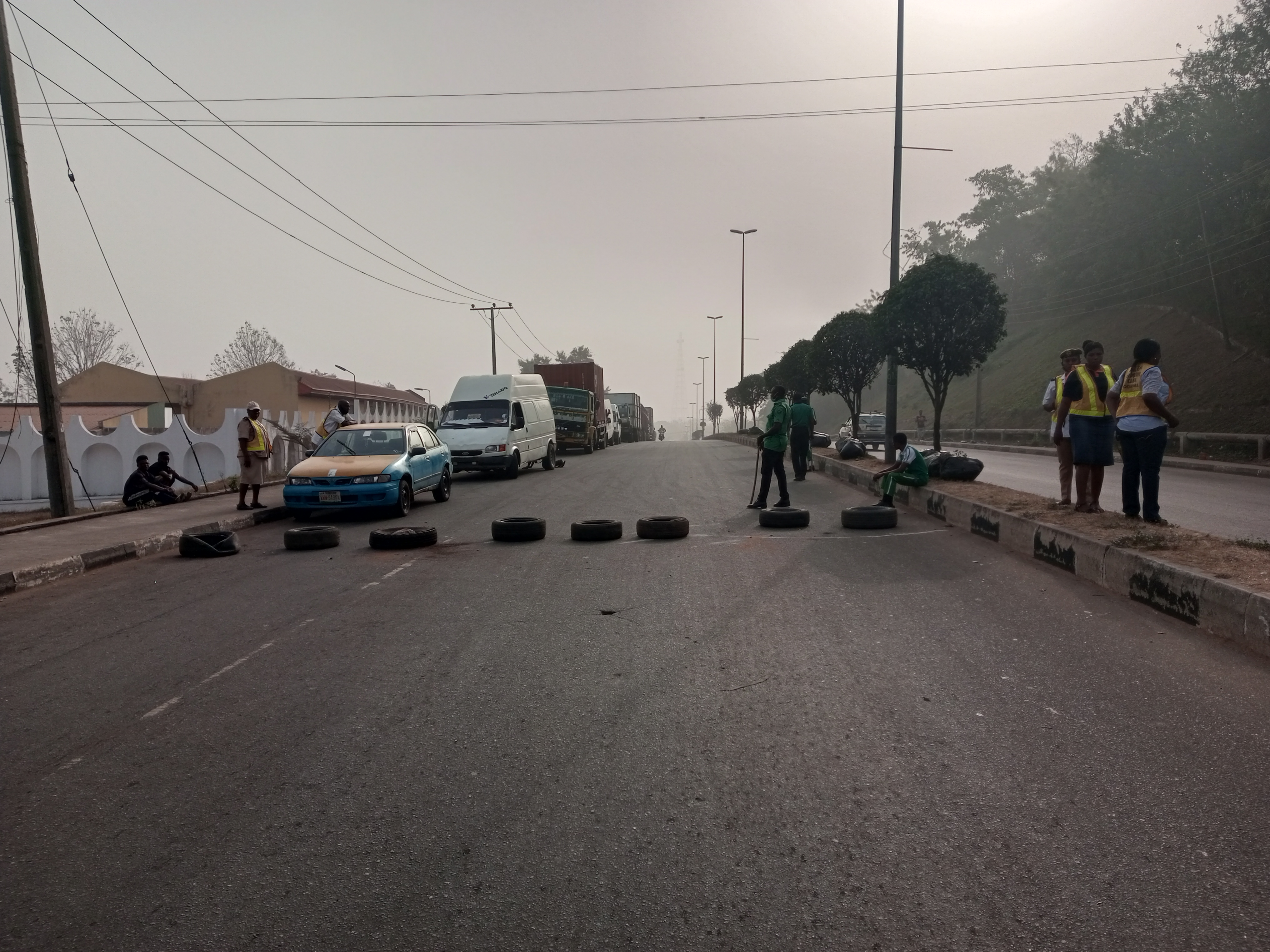
Academic activities have, on Monday, January 31, 2022, resumed at Adekunle Ajasin University, Akungba Akoko, with continuation of the first semester examinations, which was suspended on Monday, November 22, 2021, following a violent protest by students of the Institution.
Speaking with the Information Unit of the University after monitoring the examination across seven faculties, the Vice Chancellor, Prof. Olugbenga Ige, expressed satisfaction over the ongoing examinations, and commended the promptness of both staff and students.
Prof Ige said, “It is obvious that academic activities have resumed on our campus. I am impressed by the preparedness and compliance with the COVID-19 protocols.
“The process is peaceful and examinations for all the courses scheduled for the morning session, started by 8:30AM”.
The VC also commended invigilators, examination officers, Deans and examination monitoring team for being on the ground for supervision and coordination.
He emphasized his commitment to the welfare of all students throughout their stay on campus and enjoined them to be law-abiding at all times both within and outside the University campus.
He assured members of the University Community of adequate security of lives and property during and after the examinations.
In his comment, the Dean of Student Affairs Division, Prof. Olusegun Akanbi, acknowledged the peaceful conduct of the examinations and expressed pleasure over the comportment of the students.
The Commandant-General and founder, Community Vigilance Corps (CVC), Nigeria, Akinwolere Taiwo, has described intelligence gathering and information sharing as most effective ways of tackling all forms of security challenges including terrorism in the society.
Taiwo who said all hands must be on deck to complement efforts of the conventional security agencies in addressing problems of insecurity in the country, particularly called on the traditional rulers, religious leaders, community leaders and the locals to always expose criminal activities in their domains.
The CVC Commandant-General spoke at the Passing-Out Parade of 60 professionally trained officers of Community Vigilance Corps from Advance Institute of Professional Security and Intelligence Studies, Nigeria, held at the CVC Parade Ground, Ijoka Akure, the Ondo State capital.
The colourful event also witnessed induction of 1st Quarter 2022 Fellows of the Institute, where the Commandant-General and Adeoye Monday, a Chief Superintendent, Nigeria Security and Civil Defence Corps (NSCDC) were inducted.
Taiwo who congratulated the officers for their successful Passing Out Parade, equally charged them to work with the state government, security agencies and other relevant stakeholders in the society to collectively secure and protect the lives and properties of the people.
At the occasion, the Commandant-General particularly commended the Governor of Ondo State, Oluwarotimi Akeredolu, for his spirited efforts leading to the establishment of Amotekun Corps to address security challenges and protect the lives and properties of the poeple in the South-West region.
The security expert revealed that the CVC officers have been professionally trained in specialised security aspects including Counter Terrorism Intelligence, Security Communication Skills and Management, Operational and Combat Tactics, and Community Intelligence Information Gathering Strategies.
Taiwo said the Passing-Out Parade marked the end of series of programmes designed to increase the knowledge and fitness of the officers.
“A large part of the training programme is designed to increase and boost security awareness and service operation of the trainees, this is moreso at this time when the need to harness all efforts towards increasing the security of the community, local government, state and the country as a whole.
“To be frank, the whole world – local communities, states or nations now faces the issue of terrorism. This programme which aims at broadening the knowledge of trainees is geared towards combating the menace of terrorism. Simply put, counter terrorism is combating terrorism, that is, fighting the menace of terrorism”, he added.
Earlier, the National Director of Training and Academics, Advance Institute of Professional Security and Intelligence Studies, Nigeria, Dr. Akinwumi Gideon, said the Institute researches and develops specialised and customized programmes to meet up with the current trend of crimes, adding as criminals are developing new ways of commiting crime, security personnel, individuals, groups and communities must update their knowledge to be able to tackle the challenge.
Also, the Guest Lecturer and Commandant, NSCDC, Olanrewaju Odeyemi, who explained that since the terrorism started in the world over 645 terrorist groups have emerged, however, suggested conflict management through dialogue as a way of addressing increasing wave of terrorism in the country.
Highlights of the event were presentation of certificates to the trained officers as well as presentation of Awards, Medal and Lapel of Adipsis to the Fellows.
The General Manager, Ondo State Waste Management Authority (ODSWMA), Rev (Mrs) Ayo Adeyemo, has expressed dissatisfaction over the lackadaisical attitude of some residents of the state towards the cleaning of their environment.
Adeyemo while speaking with journalists shortly after monitoring the January, 2022 edition of the monthly environmental sanitation exercise in Akure, the Ondo State capital, also revealed that over 80 poeple were arrested for violating environmental laws during the exercise.
The offenders were picked up at various locations within Akure metropolis during the first sanitation exercise in the new year.
She disclosed that the Authority was not satisfied because some residents did not comply with the exercise which happened to be the first in the new year.
“We are not impressed because the people are not complying at all. They were burning refuse, some poeple were holding service in their churches, which is not suppose to be.
“Environmental sanitation hours should be hours people should keep their environment clean, and not conducting programmes in churches.
“Also, some people were selling things. They didn’t even care, maybe probably because we didn’t hold environmental sanitation exercise last year December because it was a festive period.
“The drivers too were just loading in the parks. Apart from loading, their surroundings were just filthy, unhealthy and littered with waste. So, generally, we are not impressed”, she added.
The GM, however, assured that ODSWMA would remain resolute in its commitment to ensure the Sunshine State attains first position in environmental cleanliness in Nigeria.
“Be rest assured, we are moving forward. We are going to a point where we will not see any waste again in this state. We are going to where lost glory will be restored, and God has started, His working and we are on it. It shall surely come to pass in Jesus name”, Rev Adeyemo emphasised.
She also warned those who usually dump refuse in unauthorized places to desist from such unhealthy act or be ready to face the full weight of the law.
A renowned constitutional lawyer and Mayegun Aare Ona Kankanfo of Yorubaland, Dr. Kayode Ajulo has called on Yoruba stakeholders to hold a strategic conference in the interest of the southwest and the betterment of the nation at large towards the 2023 presidential election.
He said “It will be unfortunate for the southwest to blow this chance of a lifetime to further reposition Nigeria towards the path of progress”.
Ajulo made this call while reacting to recent political developments in the region. He said crisis that may serve as a clog in the wheel of the southwest from producing the next President is looming if the internal clash of interests rocking the region is not quickly and carefully managed by southwest stakeholders.
He stated that it is important for Yoruba stakeholders, irrespective of political and religious affiliation, to come together to discuss the future of the region at the 2023 presidential election.
Ajulo, waxing philosophical, stated that when history is asleep, it is memory that wakes it up, and when memory itself falls into a stupor, we invoke remembrance to kick it into active consciousness”.
“It is exactly 60 years that Yoruba witnessed the ugly crisis between two great Yoruba illustrious sons on the altar of tussle for political leadership. The late sage and former premier of the Western Region, Chief Jeremiah Oyeniyi Obafemi Awolowo and one of his foremost followers and last premier of the Western Region, Chief Samuel Ladoke Akintola due to clash of interests.
“I can tell that the same scenario is gradually playing out between Asiwaju Bola Ahmed Tinubu and his foremost loyalist, Prof. Yemi Osinbajo. It is no news that these two men do not have unfriendly feelings towards each other but a lot of their followers and lackeys have started throwing bricks of words across walls, and that is certainly an invitation to crisis”. Ajulo said.
The former National Secretary of the Labour Party said it will be bad for the region to experience the same crisis that rocked the southwest political space in 1962, he further noted that the opportunity of the region to produce the next President is clear and only internal crisis can abort it.
“The truth is late S. L Akintola, an orator, a preacher, a teacher at the Baptist Mission, the legal adviser of the defunct Action Group after the demise of Balogun Bode Thomas, was the “Starboy” and the pan-Nigeria face of Chief Awolowo’s group and a lot of political pundits at that time and at present agreed that Akintola, being in a more favoured position by providence could have seen more than his leader and same informed his stance at that time.
“By parity of reason, one cannot deny the fact that Prof. Osinbajo, an astute orator, an inspiring harmony of brawn and brains is the “Starboy” and the most outstanding federal face of Asiwaju’s group. Undoubtedly, Osinbajo has represented this Government at different fora and definitely, would have seen more than his leader. It is a big plus that he is part of the government at the apex level.
“Asiwaju has done well for his followers and people, and I personally acknowledge that. But I strongly believe that it will further glorify Asiwaju’s leadership to support the Vice President Yemi Osinbajo as the next President” Ajulo stated.
The civil rights activist noted that the same crisis also rocked both the northern and eastern regions of the country in the 60’s, between Sir. Tafawa Balewa and Sir. Ahmadu Bello, and Dr. Nnamdi Azikiwe and Dr. Michael Okpara respectively. He said the leaders of these two regions effectively handled the differences in the interest of their regions and the nation at large.
“In respond to the recent colloquialism, brickbats and ruptured prosodies of hire writers and opinion leaders, the words of a renowned author is quite pungent in the circumstance.
“Thunder Never Strikes the same Place Twice”. Yoruba leaders must put their personal differences aside and hold a Conference of Yoruba Stakeholders like President Olusegun Obasanjo, Alaafin of Oyo, Ọọni of Ife, Oba Adeyeye Ogunwusi, Awujale of Ijebu, Oba Lamidi Adeyemi,, Alake of Egba, Iba Gani Adams, Bishop Gbonigi, Pa Ayo Adebanjo, Chief Olusegun Osoba, Deji of Akure, Olugbon of Oke Igbon, Baba Bisi Akande, Prof. Tunde Adeniran, Prof. Bolaji Akinyemi, Dr. Olusegun Mimiko, Prince Olagunsoye Oyinlola, present and past Governors in Yorubaland and other stakeholders who have the southwest interest at heart to discuss the way forward.” Ajulo said.
The Management of Adekunle Ajasin University, Akungba Akoko, Ondo State, has been assured of a robust working relationship with the Nigerian Police, especially in terms of curbing any crime within and outside the University campus.
The newly-deployed Commissioner of Police in Ondo State, Mr Oyediran Oyeyemi, gave the assurance on Monday, January 24, 2022, while playing host to the Management of the University led by its Vice Chancellor, Prof. Olugbenga Ige.
Mr. Oyeyemi, who noted that he was familiar with the prevailing security challenges on Nigerian campuses, said his men would be on alert in ensuring peace both on and off the campus.
The CP thanked the University Management for the visit.
Speaking earlier, Prof. Ige had noted that the essence of the visit was to familiarize with the new CP.
The VC, who noted the University’s mantra of excellence in all areas, expressed the readiness of the Management to cooperate with the Nigerian Police to maintain orderliness within and outside the University campus.
Dissatisfied with the abysmal low figure of women vying for elective position in the country, immediate past Federal Commissioner, Pubic Complaint Commission, Mrs Cecilia Fayase, has challenged women to stop taking the back seats in the political space.
She particularly advised women to always take active part in politics and contribute their quotas to the development of the society.
Fayase, a chieftain of the All Progressives Congress (APC) in Ondo State who observed that women always see themselves as being inferior to their men counterparts, however, charged them to brace up and run for any available elective positions both at the local, state and federal levels in the coming general elections.
She argued that women have what it takes to hold any elective positions in the country and deliver, even as she encouraged women to always support themselves during elections to ensure victory at the polls.
While describing women as prudent managers of resources, the former lawmaker said women would always excel and make good impacts if given the opportunity.
She, however, commended the state governor, Oluwarotimi Akeredolu, and his wife Betty, for always encouraging women participation in governance.
Fayase particularly applauded Governor Akeredolu for appointing more women as members of his Cabinet, saying that women have never had it so good until now.
Although she listed some of the challenges facing women while trying to contest for elections to include, financial and lack of support from their men counterparts, Fayase charged them not to be discouraged in any way but strive to achieve their desire.
“We women, I don’t know what is wrong with us, we don’t want to come out and contest. I don’t know why they are running away. This is what I have been saying for the past ten years, that, if you don’t come out nobody will come and beg you to come and contest for House of Assembly or House of Representatives or the Senate.
“Although the women are trying their best, men should also give them a chance rather than blocking them at all times. They said we women should not pay for forms but at the end of the day they will still use it against us”, she added.
She further encouraged women vying for elective positions to always be ready to pay for their forms and be ready to slug it would with the men.
On the occasion of 57th birthday of the Ondo State Deputy Governor, Lucky Aiyedatiwa, Mrs. Fayase congratulated him and wished him well as he continues to support Governor Akeredolu to deliver dividends of good governance to the people of the state.
She prayed God to continue to give the Deputy Governor long life and good health to be able to celebrate many more years in the land of the living.
Residents and traders within Akure, the Ondo State capital, have applauded the Ondo State Waste Management Authority (ODSWMA), for the sustained evacuation of waste across Akure metropolis during and after the festive season.
They said the laudable development was a big relief to them as all major roads and areas which always record heaps of waste were completely free of refuse during the Christmas and new year celebration due to the relentless and sustained efforts of ODSWMA under its General Manager, Rev. (Mrs) Ayo Adeyemo.
ODSWMA had maintained regular evacuation of waste within Akure metropolis even on Christmas and new year days, all in a bid to ensure residents celebrate in a cleaner and safer environment.
The people specifically lauded the Authority for its effectiveness and efficiency during the period when people were expected to stay in their homes and enjoy with their family members.
Commending the ODSWMA leadership on Wednesday in Akure, some traders at Oja-Oba, including Mrs Aina Bamidele; Mrs Adeyinka Salewa; Mr Kayode Olaniyi and Mrs Lola Alade, equally confirmed that all the waste generated by the traders during the festive season was all evacuated, thereby making the affected areas free of refuse.
They particularly appreciated ODSWMA for not allowing waste constitute nuisance that may lead to epidemic in any part of the State capital during the Christmas and new year celebration.
Also commending the Authority, some residents including Olumide Adelani and Eunice Balogun, said they were impressed that all the major roads such as Oba Adesida through Oyemelun Road, Arakale through NEPA Road among other areas were kept clean during the busy festive period.
They equally promised to continue to cooperate and support the ODSWMA to do more to ensure healthy living.
Speaking on the development, the ODSWMA General Manager, Rev. (Mrs) Ayo Adeyemo, emphasised that cleanliness of environment should be a daily affair regardless of the season.
She explained that they were able to achieve the laudable feat during the period because they designed some strategies and strengthened the Enforcement and Monitoring activities, while all officers across departments were also on the field day and night including Christmas and new year days.
“I mandated everybody to be on ground. They were also on night policing to ensure people did not bring their waste to the median. We even used Hilux vehicles to evacuate waste. We desilted drainages and kept everywhere clean.
“We also embarked on advocacy, telling people not to dump waste in unauthorized places and any violator would be arrested. We were also on the neck of the evacuators to ensure they evacuate promptly so that we can have a healthier and cleaner environment.
“So no Christmas or new year for us at Waste Management Authority because all of us were on field even till today because our service is essential, but I have promised to compensate them for this”, the GM stressed.
She also encouraged the people of the State to continue to cooperate and support the government as it determined to make the state cleaner and healthier for the benefit of all.
The Vice Chancellor of Adekunle Ajasin University, Akungba-Akoko (AAUA), Prof. Olugbenga Ige, has called on all members of staff of the institution to be more committed, dutiful, focused and steadfast in order for the expectations for the new year to come to fulfillment.
Prof. Ige, who made the call at a prayer programme for the new year 2022, also assured the staff of making their welfare a priority.
He stressed the need for all hands to be on deck to take the University to greater heights.
The VC said, “Let me assure you, our dear staff, that we will continue do our best to make your welfare a priority as possible as we can. I, therefore, call on you all to remain committed, steadfast, focused and dutiful such that our expectations for the New Year and beyond would come to fruition.”
He congratulated the staff on the triumph over the challenging year 2021 and thanking God for counting them worthy to witness the year 2022.
“No doubt, the outgone year was not without its numerous challenges, which I’m sure you all know, especially in terms of payment of salaries; research efforts; infrastructure development and community services.
“Notwithstanding, the 2021 experiences have helped us to restyle our mode of operations in such a way that will enable us to intensify on some of our strategies, ideas and concepts that are needed in the growth and development of our University.
“As I have said at different fora, I want you to know that we are just starting the project of building the AAUA of our dream. As a university and a new administration, we, once again, invite you all to join the endeavour of repositioning our university, while we put our eyes on the future which begins now”, he emphasised.
“In the end, we will remember not the words of our enemies but the silence of our friends” -Dr. Martin Luther King
1.0 INTRODUCTION
The democratic structure of the Nigerian State has benefitted from the massive inputs of the Nigerian media for its survival and development.
The Nigerian media ranks high on the pedestal of stakeholders of the Nigerian project, indeed, a lot of positives could be rightly credited to the Nigerian media in terms of the continued existence of this nation.
I consider the topic under reference highly imperative given the multi-faceted challenges that are currently assailing this nation, it is my humble view that a lot of beneficial nation-building ideas can be cross-fertilized through the instrumentality of this gathering today.
My approach here today relative to the topic is to conceptually clarify the key terms and expound freely on the role of the media in our current democratic set up by appraising the delicate balance between national security and press freedom.
As I round off this introductory session, please permit me to stress that Nigeria is in dire straits and only dialogue, constructive engagements and amplification of our shared humanity can reverse the gloomy extinction that stares us all in the face.
I must therefore commend the thoughtfulness of the Nigerian Union of Journalists, NTA Headquarters Chapel for deeming it fit to come up with this topic and also extending to me, the privilege of being the speaker at today’s lecture.
I am quite pleased that the NUJ has transcended the level of collective agitations for workers’ welfare to this instant discourse that calls for national solidarity. Could you please join me as I sing this eternal song of solidarity before delving into the meat of the discourse. When the union’s inspiration through the workers’ blood shall run There can be no power greater anywhere beneath the sun Yet what force on earth is weaker than the feeble strength of one But the union makes us strong Solidarity forever Solidarity forever Solidarity forever Solidarity forever For the union makes us strong It is we who plowed the prairies, built the cities where they trade Dug the mines and built the workshops, endless miles of railroad laid Now we stand outcast and starving midst the wonders we have made But the union makes us strong Solidarity forever Solidarity forever Solidarity forever For the union makes us strong They have taken untold millions that they never toiled to earn But without our brain and muscle not a single wheel can turn We can break their haughty power, gain our freedom when we learn That the union makes us strong In our hands is placed a power greater than their hoarded gold Greater than the might of atoms, magnified a thousand fold We can bring to birth a new world from the ashes of the old For the union makes us strong Solidarity forever Solidarity forever Solidarity forever For the union makes us strong
2.0. CONCEPTUAL CLARIFICATIONS Like most other concepts, security does not admit of an easy or all-encompassing definition, it is a robust concept with a borderless restraint. However, in simple terms, security is freedom from the potentialities and existentialities of harm, injury at the instance of hostile forces. It is protection from violence, coercion and fear.
Historically, there has been a consideration evolution of the concept of security since the end of the Cold War which mainly were proxy wars fought US allies on the one hand and the Soviet Union on the other hand.
Thus, security as a term of interest when referenced under this historical context would mean the increased or decreased level of hostilities between nations post World War II.
The realm of security therefore covers such contexts as global security, human security, border security, cybersecurity, environmental security, economic security, corporate security, food security, internal security, national security among others.
By the contemplation of this lecture, it is expedient in my considered view, to highlight the definitional frame of security using these three sub-contexts namely: human security, internal security and national security.
Human security simply means the protection of fundamental freedoms, that is freedoms that are the real essence of life. Human security encapsulates three freedoms: freedom from fear, freedom from want and freedom from indignity. It suggests a situation where an individual can aspire to his desired level of happiness and peace within the society. Human security is the characterized by the absence of both violent and non-violent threats to the rights of the people, their safety and their lives.
This again emphasizes the universal principle of self-preservation over and above the other concepts of security such as national security, global security, food security among others. It is however respectfully submitted that there is an interplay of these concepts alongside concept of human security. It is almost implausible that each of these sub-concepts of security can stand in isolation.
Internal security on the other hand bothers largely on the maintenance of peace within the confines of a sovereign state by ensuring that there is an observance, compliance and adherence to the laws of the land by citizens. Internal security ensures that internal aggression and threats within the borders of a nation are warded off or met with the monopolized violence of the State. The responsibility of internal security is primarily within the purview of the constitutional mandate of the Police. Other paramilitary agencies equally share in this responsibility and they are all guided by the laws establishing them.
National Security as the name suggests bother on the security of the nation as a corporate entity. It is all encompassing but the main goal is the defence of the corporate existence of a country. In that vein, the armed forces are empowered by the Constitution to defend the territorial integrity of the nation. They undertake the important duty of defending the nation against external aggressors and in some instances, internal aggressors. National security could also extend to the defence of a nation’s economy against saboteurs and traitors.
Admittedly, at the base of national security is the maintenance of the political structure of a nation state which carries with it a non-negotiability tag.
Going further under the chapter, the term media has been given several definitions, however simpliciter, the term connotes any channel of communication. This can include anything from printed paper to digital data. It refers to television, radio, newspaper, internet and other forms of communication. I dare say that any other definition is an expansion of the afore-stated ones.
3.0 THE ROLE OF THE MEDIA IN NIGERIA’S DEMOCRACY Democracy has been popularly defined as a government of the people by the people and for the people. This invariably means that democracy is about popular choices; the general expression of the will of the majority while also ensuring that the minority are not precluded from having their say. It is the system of government that opens the electorates to a vista of choices and how those choices are to be made without any fear or coercion.
Indeed, democracy is a big deal as it practically puts the socio-economic fortunes of the people in the hands of a few decision makers.
Most often, efforts are dissipated into referencing the executive, the legislature and the judiciary as being the three arms of government in a democracy because they are explicitly named as beneficiaries of the power sharing structure as contained in the constitution of any democratic state, however, the media is the pillar that supports this structure. This is what informs the coronation of the media as the fourth estate of the realm. The existence of the media is tied to the sovereignty of the people from whom government derives its constitutional powers in exchange for fundamental freedom of expression of the people.
The Nigerian media is a critical stakeholder in every sphere of the Nigerian project; from the military days to this present democratic dispensation, the Nigerian media has continued to advance and stabilize the democratic structure of the Nigerian State by promoting the fundamental freedoms of the Nigerian people. With the instrumentality of the proverbial pen which is mightier than the sword, the Nigerian media has demonstrated that indeed it is a powerful force to be reckoned with in the society.
In May 1999, Nigeria returned to democratic governance after series of military interregna and Nigeria’s Fourth Estate of the Realm has since remained resilient and patriotic in their noble duties despite the daunting intimidation, threats and harassments by state and non-state actors.
The media having been vested with the constitutional mandate of holding the government to account has not cowered or shirked this responsibility. For context, Section 22 of the Constitution of the Federal Republic of Nigeria 1999 (as amended) is hereby reproduced below: “The press, radio, television and other agencies of the mass media shall at all times be free to uphold the fundamental objectives contained in this Chapter and uphold the responsibility and accountability of the Government to the people.”
The above obligation further deepens the imprimatur of the Nigerian people to hold the government to account using the agency of the mass media. A number of media organizations have gone ahead to crystallize their position in this regard by enforcing the freedom of the press as guaranteed under Section 39 of the Constitution of the Federal Republic of Nigeria.
Again, it is not rocket science that the continued legitimacy of any democratic government is assured when the right to freedom of speech and expression and by extension other fundamental rights are protected at all costs.
The watchdog appellation given to the media is an understatement of the power it possesses relative to governmental powers. Only a fool dares to lock horns with the fourth estate of the realm.
The Nigerian media provides the platform through which the people are informed about the activities of the government and this is crucial because once there is a disconnect between the governed and the government, then the democratic process is exposed to attacks by agent provocateurs, saboteurs and unpatriotic elements in the opposition.
The electoral process is another area where the noble duty of the media is also largely felt. The pre-election, election and post-election stages of the election cycles have always received adequate attention of the Nigerian media by way of voters’ education, voters’ information, voters’ mobilization and monitoring of election results. The electorates are presented with plethora of information by the Nigerian media in an election season and the consequent choices again give life to our democracy.
Furthermore, the democratic development of the nation rests on the shoulders of the media who daily reports the activities of the three arms of the government without fail. Save for instances where a media organization is alleged to have breached certain codes of broadcasting in the opinion of the Nigerian Broadcasting Corporation, there is hardly a time when the people are not informed about the government as well as happenings in the society.
That said, it is important to emphasise that the standard of objectivity which is a core value of the media profession has become manipulated and eroded by some media practitioners and organizations to such an extent that recklessness and partisanship is now fronted as ‘holding the government to account’.
This is a lamentable tragedy which must reversed because the issues that now confront the Nigerian State calls for restraint, decency, patriotism and civility when reporting the news.
The role of the Nigerian media therefore is not the portrayal of the government as weak but a careful balance is needed so as not to play into the hands of enemies of the State. This brings to the fore the issue of National security which will be discussed better in the succeeding chapter.
4.0 NATIONAL SECURITY AND THE MEDIA As earlier inferred, national security cannot be seen alone from the standpoint of the protection of the territorial integrity of Nigeria but it encompasses the continued existence of Nigeria as a corporate entity. It therefore means that anything that comes against the circumference of that continued existence of Nigeria is to be taken as a threat to national security. This is quite instructive because there are unarmed individuals with a large followership whose words of mouth or statement can wreck devastating havoc on our corporate existence. The Nigerian media when used in advancing and propagating such inflammatory statements are culpable in such threat to national security.
Closely instructive here is the case of Asari Dokubo v. Federal Republic of Nigeria which was finally decided by the Supreme Court in 2007, one of the counts upon which the accused was charged at the trial court was premised on the interview he granted to the Independent Newspaper wherein he stated inter alia as follows: “Nigeria is an evil entity. It has nothing to stand on and I will continue to fight and try and see that Nigeria dissolves and disintegrates and I am ready to hold on to the struggle to see to this till the day I die. I do not see any reason why I should continue to live with people that have no relationship with me whatsoever.”
The above was taken to be a threat to national security and thus the appellant was denied bail which was contested at the Supreme Court. The apex court in deciding the propriety or otherwise of the bail denial held as follows: “Where national security is threatened or there is a real likelihood of it being threatened, human rights or the individual right of those responsible take second place, human rights or individual rights must be suspended until the national security can be protected or well taken care of. This is not anything new. The corporate existence of Nigeria as a united, harmonious, indivisible and indissoluble sovereign nation is certainly greater than any citizen’s liberty or right. Once the security of this nation is in jeopardy and it survives in pieces rather than in peace, the individual’s liberty or right may not even exist.”
The above decision was a restatement of an earlier decision of the Court of Appeal with Justice Bode Rhodes-Vivour delivering the lead judgment. Now, this subsisting judgment of the Supreme Court became an authority upon which President Buhari stated at the NBA conference in 2018 that “Rule of Law must be subject to the supremacy of the nation’s security and national interest. Our apex court has had cause to adopt a position on this issue on this issue in this regard and it is now a matter of judicial recognition that; where national security and public interest are threatened or there is a likelihood of their being threatened, the individual rights of those allegedly responsible must take second place, in favour of the greater good of society.”
Most respectfully, the President’s conflation of national security, national interest on one hand and rule of law and individual rights on the other hand is a bit problematic, in the sense that the rule of law emphasizes the supremacy of the law over the leader, the led and the decisions taken by them in between. For definition purposes, foremost Professor of Law. A. V Dicey defined the rule of law as the equality of all persons before the law; observance of all laws by persons and authorities, irrespective of status. In the case of Military Governor of Lagos State v. Ojukwu (2001) FWLR (Pt. 50) 1779, the Supreme Court held inter alia as follows: “The Nigerian Constitution is founded on the rule of law, the primary meaning of which is that everything must be done according to law. Nigeria, being one of the countries in the world which professes loudly to follow the rule of law, gives no room for the rule of self-help by force to operate.”
The rule of law is therefore accommodative of national security, the national interest and individual rights.
Contradistinctively, the President was right that individual rights can take the back stage in favour of national interest and by extension, national security. It is therefore submitted that human rights can be suspended upon the determination of a court of competent jurisdiction.
It is not a secret that some sections of the Nigerian media have given their platforms to secessionists, ethnic jingoists, tribal warlords and others who have an issue with the unity of Nigeria to promote their warped ideologies and agenda. This is a grave misapprehension of one of the core ethics of journalism which is fair and balanced reportage of the news. However, in my opinion, unfair and unpatriotic comments ab-initio should not qualify to be reported in the news. Given the peculiarities of the Nigeria, our choices are limited in this journey of nationhood and given the potent power of the press, we should ensure as much as possible that negative opinion moulders do not get the attention they so much desire by featuring them as new items.
It is naturally expected that mainstream media will reflect the distinctions in our national unity by upholding the difference in opinions and perspectives of our diverse tribes and culture. This however must be subject to our shared national values. There is the need for a proper management of our diversity by media organisations, in such a manner that the national interest is protected at all costs.
A lot unite us in this nation rather than our differences, we must celebrate our significant positives and tone down our apparent negatives. It is a fact that cannot be gainsaid that the menace of insecurity has become so protracted and convoluted that no region is spared of it. Violent cult activities, armed robbery attacks, the ENDSARS protests, the Southern Kaduna massacres by armed herders, IPOB agitations and lately Ilana Omo Oodua agitations, banditry, Boko Haram attacks, attacks on police formations, abductions are just few examples of the geographical distribution of insecurity in Nigeria.
I must stress however that insecurity is a universal phenomenon and the current challenges bedeviling our security architecture are largely traceable to the political instability and crisis of the Sahel Region notably Libya and Morocco and the resulting proliferation of arms has provided opportunities for criminal elements who now assail Nigeria with all manners of woes. It is a fact that the whole world remains a huge arena of conflict and insecurity despite the concerted efforts at world peace. Advanced democracies have their fair share of insecurity especially gun-related shootings but the manner of dissemination of the news always tend to portray the authorities in those countries as strong and powerful enough to contain these threats. It is therefore wise for the Nigerian media to douse tensions that viciously threaten us by upholding the tenets of responsible and patriotic journalism other than the one that gives more leverage and attention to the enemy.
The role of the media during conflict situations for instance should not only protect the developing activities in a particular area but to present the comprehensive response of the State in order for citizens outside those affected areas and indeed everyone to engage the Government as touching the conflict.
The Fourth Estate of the Realm must ensure a dispassionate and objective dissemination of information at all times to the citizens. The government should endeavour to constantly engage the press so that it will not suffer perception issues. The freedom of the press is non-negotiable and paramount in a constitutional democracy and its protection must be guaranteed at all times, an attempt to gag the press or criminalize free speech is an invitation to the rejection of governmental authority which is entrusted on the government by the people. On the other hand, citizens must be educated by the press that every right comes with its corresponding duty and responsibility, free speech therefore should not be construed to mean license to make careless, reckless and violence evoking statements.
The above advisory should not be construed as suggesting that the Nigerian media should favour the government at the expense of the citizens’ right to proper information. On the other hand, the government must clarify issues of national interest by engaging and seeking the understanding of the media rather than their usual response of coercion.
5.0 CONCLUSION The role of the media in stabilizing Nigeria’s democracy can be viewed from the standpoint of their duties as affirmed under the constitution. There is no gainsaying the point that the Nigerian media has been at the forefront of advocacy for citizens’ participation in governance and in my considered opinion, they remain the real defenders of this core democratic right. The balance here is that every right comes with its corresponding responsibility and as a passionate advocate of press freedom, I want to strongly counsel that the Nigerian media in upholding fundamental freedoms should also strive to uphold and defend national security.
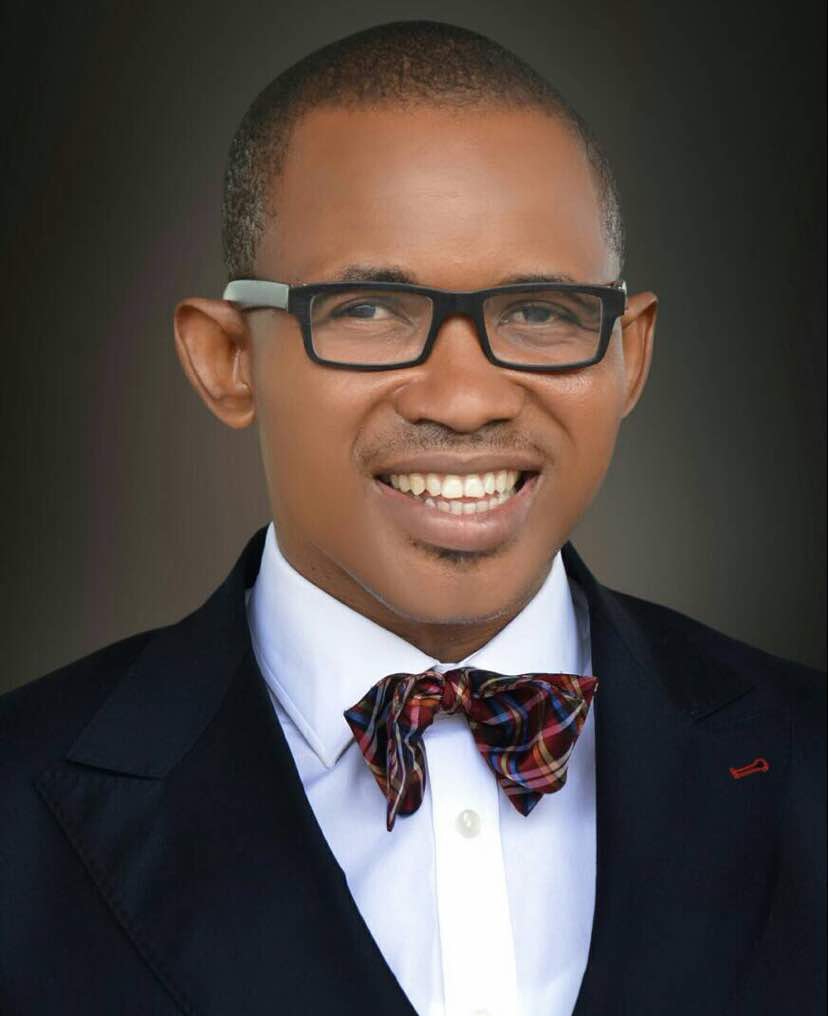
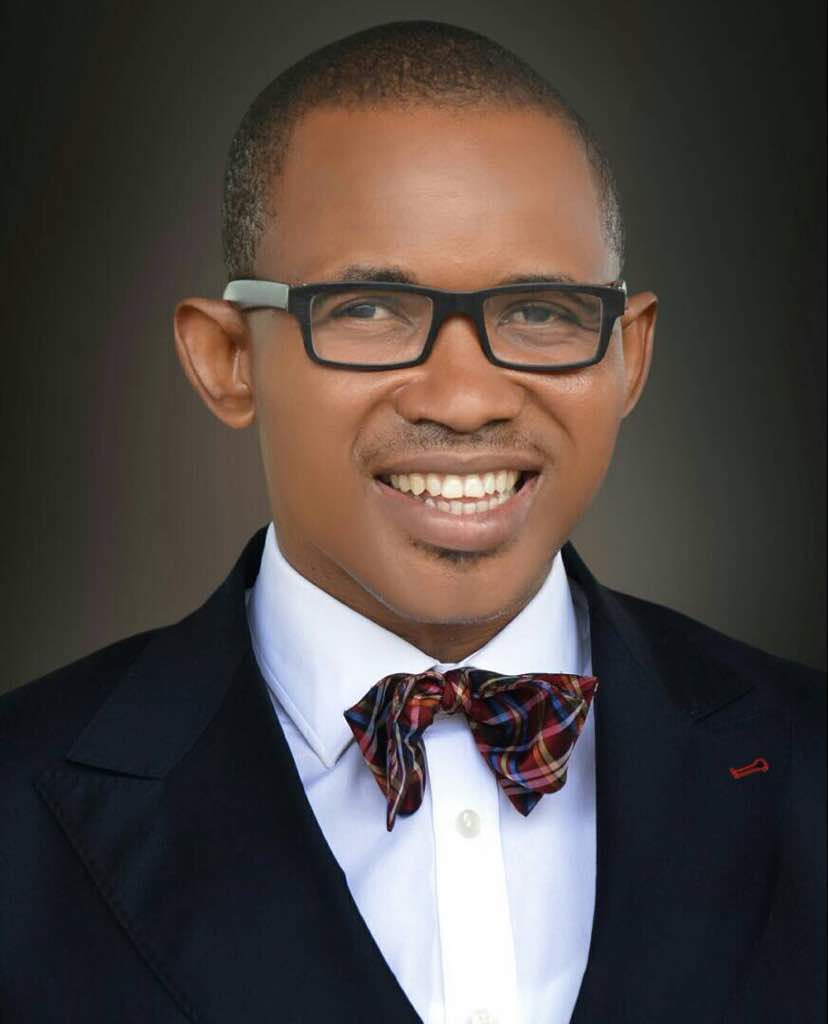
· Ajulo, the Managing Partner Castle of Law and Executive Director, Egalitarian Mission For Africa delivered this paper at the NUJ NTA Headquarters Chapel’s Week in Abuja.
1.0 INTRODUCTION
The democratic structure of the Nigerian State has benefitted from the massive inputs of the Nigerian media for its survival and development.
The Nigerian media ranks high on the pedestal of stakeholders of the Nigerian project, indeed, a lot of positives could be rightly credited to the Nigerian media in terms of the continued existence of this nation.
I consider the topic under reference highly imperative given the multi-faceted challenges that are currently assailing this nation, it is my humble view that a lot of beneficial nation-building ideas can be cross-fertilized through the instrumentality of this gathering today.
My approach here today relative to the topic is to conceptually clarify the key terms and expound freely on the role of the media in our current democratic set up by appraising the delicate balance between national security and press freedom.
As I round off this introductory session, please permit me to stress that Nigeria is in dire straits and only dialogue, constructive engagements and amplification of our shared humanity can reverse the gloomy extinction that stares us all in the face.
I must therefore commend the thoughtfulness of the Nigerian Union of Journalists, NTA Headquarters Chapel for deeming it fit to come up with this topic and also extending to me, the privilege of being the speaker at today’s lecture.
I am quite pleased that the NUJ has transcended the level of collective agitations for workers’ welfare to this instant discourse that calls for national solidarity. Could you please join me as I sing this eternal song of solidarity before delving into the meat of the discourse. When the union’s inspiration through the workers’ blood shall run There can be no power greater anywhere beneath the sun Yet what force on earth is weaker than the feeble strength of one But the union makes us strong Solidarity forever Solidarity forever Solidarity forever Solidarity forever For the union makes us strong It is we who plowed the prairies, built the cities where they trade Dug the mines and built the workshops, endless miles of railroad laid Now we stand outcast and starving midst the wonders we have made But the union makes us strong Solidarity forever Solidarity forever Solidarity forever For the union makes us strong They have taken untold millions that they never toiled to earn But without our brain and muscle not a single wheel can turn We can break their haughty power, gain our freedom when we learn That the union makes us strong In our hands is placed a power greater than their hoarded gold Greater than the might of atoms, magnified a thousand fold We can bring to birth a new world from the ashes of the old For the union makes us strong Solidarity forever Solidarity forever Solidarity forever For the union makes us strong
2.0. CONCEPTUAL CLARIFICATIONS Like most other concepts, security does not admit of an easy or all-encompassing definition, it is a robust concept with a borderless restraint. However, in simple terms, security is freedom from the potentialities and existentialities of harm, injury at the instance of hostile forces. It is protection from violence, coercion and fear.
Historically, there has been a consideration evolution of the concept of security since the end of the Cold War which mainly were proxy wars fought US allies on the one hand and the Soviet Union on the other hand.
Thus, security as a term of interest when referenced under this historical context would mean the increased or decreased level of hostilities between nations post World War II.
The realm of security therefore covers such contexts as global security, human security, border security, cybersecurity, environmental security, economic security, corporate security, food security, internal security, national security among others.
By the contemplation of this lecture, it is expedient in my considered view, to highlight the definitional frame of security using these three sub-contexts namely: human security, internal security and national security.
Human security simply means the protection of fundamental freedoms, that is freedoms that are the real essence of life. Human security encapsulates three freedoms: freedom from fear, freedom from want and freedom from indignity. It suggests a situation where an individual can aspire to his desired level of happiness and peace within the society. Human security is the characterized by the absence of both violent and non-violent threats to the rights of the people, their safety and their lives.
This again emphasizes the universal principle of self-preservation over and above the other concepts of security such as national security, global security, food security among others. It is however respectfully submitted that there is an interplay of these concepts alongside concept of human security. It is almost implausible that each of these sub-concepts of security can stand in isolation.
Internal security on the other hand bothers largely on the maintenance of peace within the confines of a sovereign state by ensuring that there is an observance, compliance and adherence to the laws of the land by citizens. Internal security ensures that internal aggression and threats within the borders of a nation are warded off or met with the monopolized violence of the State. The responsibility of internal security is primarily within the purview of the constitutional mandate of the Police. Other paramilitary agencies equally share in this responsibility and they are all guided by the laws establishing them.
National Security as the name suggests bother on the security of the nation as a corporate entity. It is all encompassing but the main goal is the defence of the corporate existence of a country. In that vein, the armed forces are empowered by the Constitution to defend the territorial integrity of the nation. They undertake the important duty of defending the nation against external aggressors and in some instances, internal aggressors. National security could also extend to the defence of a nation’s economy against saboteurs and traitors.
Admittedly, at the base of national security is the maintenance of the political structure of a nation state which carries with it a non-negotiability tag.
Going further under the chapter, the term media has been given several definitions, however simpliciter, the term connotes any channel of communication. This can include anything from printed paper to digital data. It refers to television, radio, newspaper, internet and other forms of communication. I dare say that any other definition is an expansion of the afore-stated ones.
3.0 THE ROLE OF THE MEDIA IN NIGERIA’S DEMOCRACY Democracy has been popularly defined as a government of the people by the people and for the people. This invariably means that democracy is about popular choices; the general expression of the will of the majority while also ensuring that the minority are not precluded from having their say. It is the system of government that opens the electorates to a vista of choices and how those choices are to be made without any fear or coercion.
Indeed, democracy is a big deal as it practically puts the socio-economic fortunes of the people in the hands of a few decision makers.
Most often, efforts are dissipated into referencing the executive, the legislature and the judiciary as being the three arms of government in a democracy because they are explicitly named as beneficiaries of the power sharing structure as contained in the constitution of any democratic state, however, the media is the pillar that supports this structure. This is what informs the coronation of the media as the fourth estate of the realm. The existence of the media is tied to the sovereignty of the people from whom government derives its constitutional powers in exchange for fundamental freedom of expression of the people.
The Nigerian media is a critical stakeholder in every sphere of the Nigerian project; from the military days to this present democratic dispensation, the Nigerian media has continued to advance and stabilize the democratic structure of the Nigerian State by promoting the fundamental freedoms of the Nigerian people. With the instrumentality of the proverbial pen which is mightier than the sword, the Nigerian media has demonstrated that indeed it is a powerful force to be reckoned with in the society.
In May 1999, Nigeria returned to democratic governance after series of military interregna and Nigeria’s Fourth Estate of the Realm has since remained resilient and patriotic in their noble duties despite the daunting intimidation, threats and harassments by state and non-state actors.
The media having been vested with the constitutional mandate of holding the government to account has not cowered or shirked this responsibility. For context, Section 22 of the Constitution of the Federal Republic of Nigeria 1999 (as amended) is hereby reproduced below: “The press, radio, television and other agencies of the mass media shall at all times be free to uphold the fundamental objectives contained in this Chapter and uphold the responsibility and accountability of the Government to the people.”
The above obligation further deepens the imprimatur of the Nigerian people to hold the government to account using the agency of the mass media. A number of media organizations have gone ahead to crystallize their position in this regard by enforcing the freedom of the press as guaranteed under Section 39 of the Constitution of the Federal Republic of Nigeria.
Again, it is not rocket science that the continued legitimacy of any democratic government is assured when the right to freedom of speech and expression and by extension other fundamental rights are protected at all costs.
The watchdog appellation given to the media is an understatement of the power it possesses relative to governmental powers. Only a fool dares to lock horns with the fourth estate of the realm.
The Nigerian media provides the platform through which the people are informed about the activities of the government and this is crucial because once there is a disconnect between the governed and the government, then the democratic process is exposed to attacks by agent provocateurs, saboteurs and unpatriotic elements in the opposition.
The electoral process is another area where the noble duty of the media is also largely felt. The pre-election, election and post-election stages of the election cycles have always received adequate attention of the Nigerian media by way of voters’ education, voters’ information, voters’ mobilization and monitoring of election results. The electorates are presented with plethora of information by the Nigerian media in an election season and the consequent choices again give life to our democracy.
Furthermore, the democratic development of the nation rests on the shoulders of the media who daily reports the activities of the three arms of the government without fail. Save for instances where a media organization is alleged to have breached certain codes of broadcasting in the opinion of the Nigerian Broadcasting Corporation, there is hardly a time when the people are not informed about the government as well as happenings in the society.
That said, it is important to emphasise that the standard of objectivity which is a core value of the media profession has become manipulated and eroded by some media practitioners and organizations to such an extent that recklessness and partisanship is now fronted as ‘holding the government to account’.
This is a lamentable tragedy which must reversed because the issues that now confront the Nigerian State calls for restraint, decency, patriotism and civility when reporting the news.
The role of the Nigerian media therefore is not the portrayal of the government as weak but a careful balance is needed so as not to play into the hands of enemies of the State. This brings to the fore the issue of National security which will be discussed better in the succeeding chapter.
4.0 NATIONAL SECURITY AND THE MEDIA As earlier inferred, national security cannot be seen alone from the standpoint of the protection of the territorial integrity of Nigeria but it encompasses the continued existence of Nigeria as a corporate entity. It therefore means that anything that comes against the circumference of that continued existence of Nigeria is to be taken as a threat to national security. This is quite instructive because there are unarmed individuals with a large followership whose words of mouth or statement can wreck devastating havoc on our corporate existence. The Nigerian media when used in advancing and propagating such inflammatory statements are culpable in such threat to national security.
Closely instructive here is the case of Asari Dokubo v. Federal Republic of Nigeria which was finally decided by the Supreme Court in 2007, one of the counts upon which the accused was charged at the trial court was premised on the interview he granted to the Independent Newspaper wherein he stated inter alia as follows: “Nigeria is an evil entity. It has nothing to stand on and I will continue to fight and try and see that Nigeria dissolves and disintegrates and I am ready to hold on to the struggle to see to this till the day I die. I do not see any reason why I should continue to live with people that have no relationship with me whatsoever.”
The above was taken to be a threat to national security and thus the appellant was denied bail which was contested at the Supreme Court. The apex court in deciding the propriety or otherwise of the bail denial held as follows: “Where national security is threatened or there is a real likelihood of it being threatened, human rights or the individual right of those responsible take second place, human rights or individual rights must be suspended until the national security can be protected or well taken care of. This is not anything new. The corporate existence of Nigeria as a united, harmonious, indivisible and indissoluble sovereign nation is certainly greater than any citizen’s liberty or right. Once the security of this nation is in jeopardy and it survives in pieces rather than in peace, the individual’s liberty or right may not even exist.”
The above decision was a restatement of an earlier decision of the Court of Appeal with Justice Bode Rhodes-Vivour delivering the lead judgment. Now, this subsisting judgment of the Supreme Court became an authority upon which President Buhari stated at the NBA conference in 2018 that “Rule of Law must be subject to the supremacy of the nation’s security and national interest. Our apex court has had cause to adopt a position on this issue on this issue in this regard and it is now a matter of judicial recognition that; where national security and public interest are threatened or there is a likelihood of their being threatened, the individual rights of those allegedly responsible must take second place, in favour of the greater good of society.”
Most respectfully, the President’s conflation of national security, national interest on one hand and rule of law and individual rights on the other hand is a bit problematic, in the sense that the rule of law emphasizes the supremacy of the law over the leader, the led and the decisions taken by them in between. For definition purposes, foremost Professor of Law. A. V Dicey defined the rule of law as the equality of all persons before the law; observance of all laws by persons and authorities, irrespective of status. In the case of Military Governor of Lagos State v. Ojukwu (2001) FWLR (Pt. 50) 1779, the Supreme Court held inter alia as follows: “The Nigerian Constitution is founded on the rule of law, the primary meaning of which is that everything must be done according to law. Nigeria, being one of the countries in the world which professes loudly to follow the rule of law, gives no room for the rule of self-help by force to operate.”
The rule of law is therefore accommodative of national security, the national interest and individual rights.
Contradistinctively, the President was right that individual rights can take the back stage in favour of national interest and by extension, national security. It is therefore submitted that human rights can be suspended upon the determination of a court of competent jurisdiction.
It is not a secret that some sections of the Nigerian media have given their platforms to secessionists, ethnic jingoists, tribal warlords and others who have an issue with the unity of Nigeria to promote their warped ideologies and agenda. This is a grave misapprehension of one of the core ethics of journalism which is fair and balanced reportage of the news. However, in my opinion, unfair and unpatriotic comments ab-initio should not qualify to be reported in the news. Given the peculiarities of the Nigeria, our choices are limited in this journey of nationhood and given the potent power of the press, we should ensure as much as possible that negative opinion moulders do not get the attention they so much desire by featuring them as new items.
It is naturally expected that mainstream media will reflect the distinctions in our national unity by upholding the difference in opinions and perspectives of our diverse tribes and culture. This however must be subject to our shared national values. There is the need for a proper management of our diversity by media organisations, in such a manner that the national interest is protected at all costs.
A lot unite us in this nation rather than our differences, we must celebrate our significant positives and tone down our apparent negatives. It is a fact that cannot be gainsaid that the menace of insecurity has become so protracted and convoluted that no region is spared of it. Violent cult activities, armed robbery attacks, the ENDSARS protests, the Southern Kaduna massacres by armed herders, IPOB agitations and lately Ilana Omo Oodua agitations, banditry, Boko Haram attacks, attacks on police formations, abductions are just few examples of the geographical distribution of insecurity in Nigeria.
I must stress however that insecurity is a universal phenomenon and the current challenges bedeviling our security architecture are largely traceable to the political instability and crisis of the Sahel Region notably Libya and Morocco and the resulting proliferation of arms has provided opportunities for criminal elements who now assail Nigeria with all manners of woes. It is a fact that the whole world remains a huge arena of conflict and insecurity despite the concerted efforts at world peace. Advanced democracies have their fair share of insecurity especially gun-related shootings but the manner of dissemination of the news always tend to portray the authorities in those countries as strong and powerful enough to contain these threats. It is therefore wise for the Nigerian media to douse tensions that viciously threaten us by upholding the tenets of responsible and patriotic journalism other than the one that gives more leverage and attention to the enemy.
The role of the media during conflict situations for instance should not only protect the developing activities in a particular area but to present the comprehensive response of the State in order for citizens outside those affected areas and indeed everyone to engage the Government as touching the conflict.
The Fourth Estate of the Realm must ensure a dispassionate and objective dissemination of information at all times to the citizens. The government should endeavour to constantly engage the press so that it will not suffer perception issues. The freedom of the press is non-negotiable and paramount in a constitutional democracy and its protection must be guaranteed at all times, an attempt to gag the press or criminalize free speech is an invitation to the rejection of governmental authority which is entrusted on the government by the people. On the other hand, citizens must be educated by the press that every right comes with its corresponding duty and responsibility, free speech therefore should not be construed to mean license to make careless, reckless and violence evoking statements.
The above advisory should not be construed as suggesting that the Nigerian media should favour the government at the expense of the citizens’ right to proper information. On the other hand, the government must clarify issues of national interest by engaging and seeking the understanding of the media rather than their usual response of coercion.
5.0 CONCLUSION The role of the media in stabilizing Nigeria’s democracy can be viewed from the standpoint of their duties as affirmed under the constitution. There is no gainsaying the point that the Nigerian media has been at the forefront of advocacy for citizens’ participation in governance and in my considered opinion, they remain the real defenders of this core democratic right. The balance here is that every right comes with its corresponding responsibility and as a passionate advocate of press freedom, I want to strongly counsel that the Nigerian media in upholding fundamental freedoms should also strive to uphold and defend national security.
· Ajulo, the Managing Partner Castle of Law and Executive Director, Egalitarian Mission For Africa delivered this paper at the NUJ NTA Headquarters Chapel’s Week in Abuja.




 newsafresh